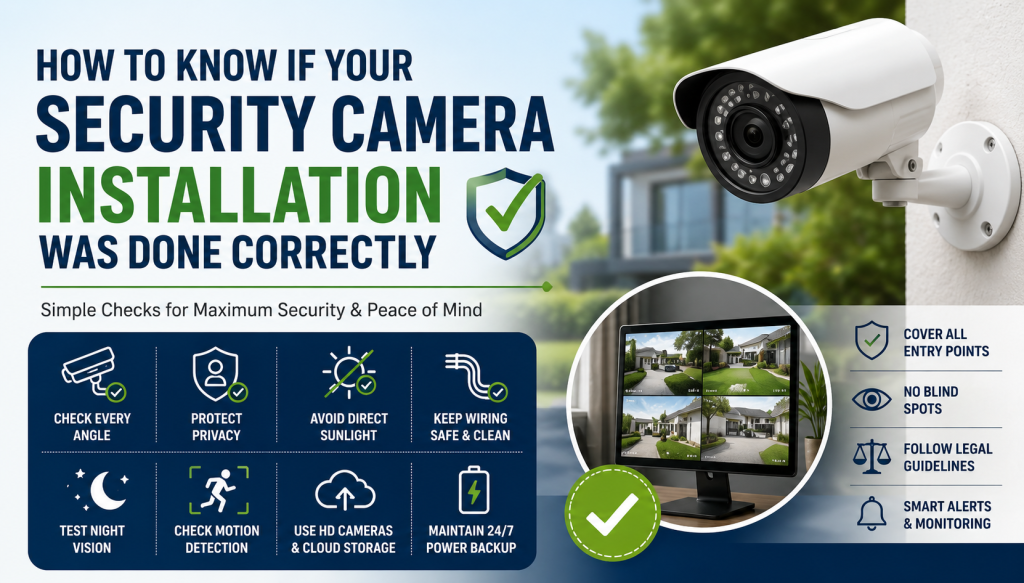
Correct security camera installation is most important for covering all entry points for safety. There are a number of blind spots that exist on properties, whether it’s a home, shop, society, commercial building, car dealership, construction site, scrapyard, shopping centre, etc., so camera installation at a proper height of around 10 to 12 feet is compulsory to cover all blind spots.
Now the question is, how can you check if it was installed correctly or not?
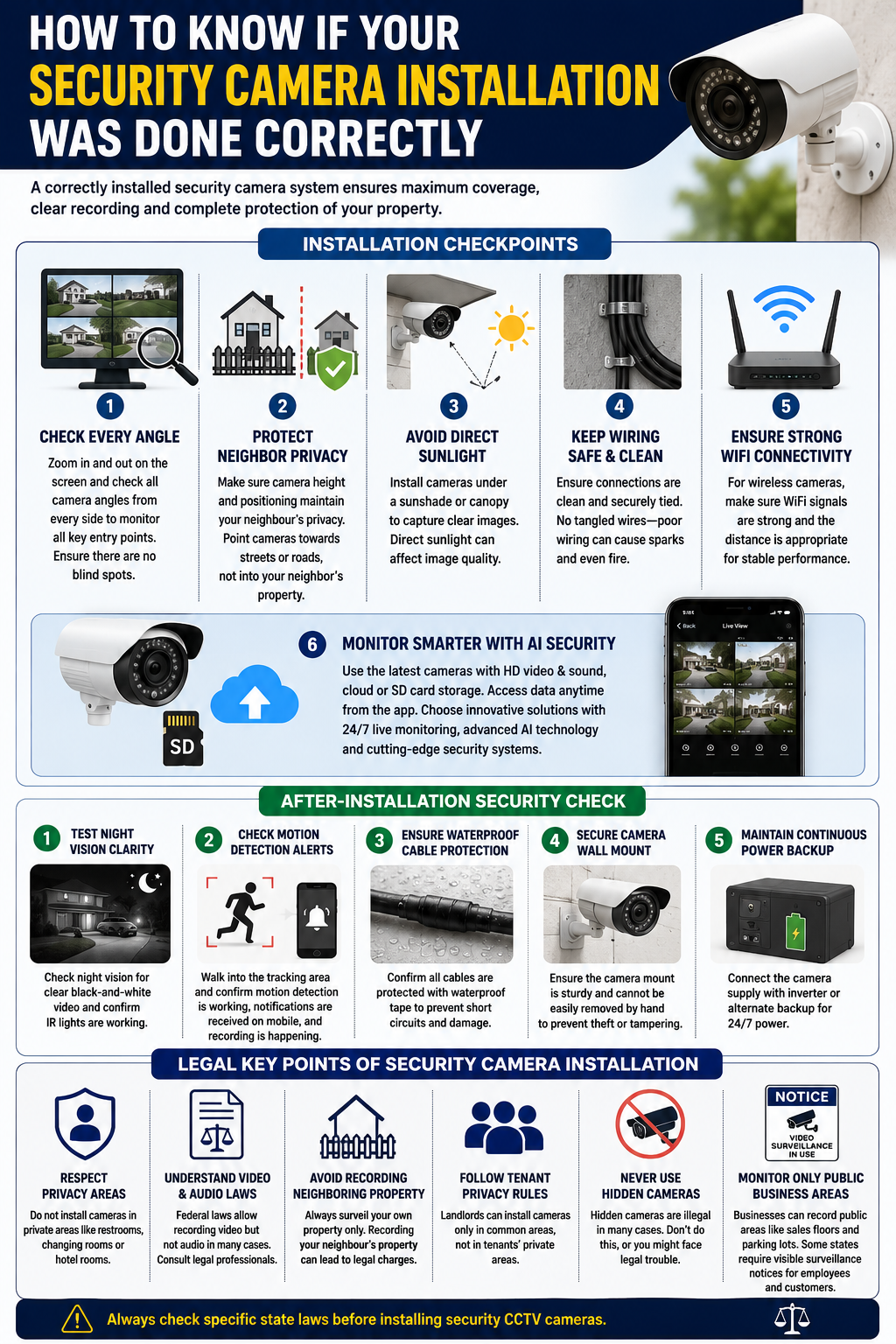
Check Every Angle
First of all, check the screen and zoom in and zoom out with the camera to ensure you can monitor all the key entry points of your property. Then check the camera angles from all sides to ensure there is no blind spot that you are unable to cover through the security cameras.
Protect Neighbor Privacy
Go outside the property and make sure the camera installation height and camera positioning maintain your neighbour’s privacy. You can point a camera toward the street or road angles, but not toward your neighbour’s backyard. So whenever you hire an expert proactive video monitoring team like Overwatch, keep these points in mind.
Avoid Direct Sunlight
Next, the camera should be installed underneath a sunshade or canopy so it can capture clear images and videos that can be very important as evidence in case of burglary. Direct sunlight may affect the image quality, so avoid direct sunlight. Choose the right corner to fix the camera.
Keep Wiring Safe and Clean
Check the wire connectivity and make sure the connections are clean and safely tied up. Make sure there are no tangled wires; unprofessional wire fixing can cause sparks and even fire. To avoid this risk, always choose a professional and certified camera operator or technician. If you choose a wireless camera, then make sure the WiFi signals are at a proper distance.
Monitor Smarter with AI Security
The camera should be the latest model and have the ability to record clear HD video and sound and store it in the cloud or on an SD card. This allows the owner to collect data from the relevant app. Always choose innovative security solutions like the ones we provide, including 24/7 live monitoring, advanced AI technology, and cutting-edge security systems.
After-Installation Security Check
Test Night Vision Clarity
Test the camera’s night vision; it should be clear and produce clear black-and-white video, and confirm that the infrared (IR) lights are working.
Check Motion Detection Alerts
Check the motion detector by walking into the tracking area and confirming that the motion detector is working properly, sending notifications to the mobile device, and recording at the same time.
Ensure Waterproof Cable Protection
Once the technician has completed the job, confirm that the cables are protected with waterproof tape to mitigate the risk of a short circuit.
Secure the Camera Wall Mount
Check the wall mount of the camera and confirm it cannot be easily removed by hand because, in case of theft, a thief may first remove the camera and then invade the property boundary.
Maintain Continuous Power Backup
Lastly, confirm the camera has a consistent power supply. Connect the camera supply with an inverter or alternate backup for 24/7 power to protect your property at all times.
Legal Key Points of Security Camera Installation
Security cameras for private property are legal in the US, but there are some laws that need to be followed. Read the points below carefully.
Respect Privacy Areas
We cannot install cameras in places where privacy matters, such as restrooms, changing rooms, or hotel rooms.
Understand Video & Audio Laws
There are some federal laws that allow recording video but not audio; consult legal professionals regarding this.
Avoid Recording Neighboring Property
Always surveil your own property; you do not have the right to capture your neighbour’s property. If this happens, you may face legal charges.
Follow Tenant Privacy Rules
Landlords can place cameras for tenants’ security, but only in common areas, not in tenants’ private areas.
Never Use Hidden Cameras
Hidden cameras are illegal in many cases. Do not do this, or you might get involved in legal trouble.
Monitor Only Public Business Areas
Business owners can record video in public areas like sales floors and parking lots, but certain states require businesses to display visible surveillance notices for employees and customers.
Always check specific state laws before installing security CCTV cameras.